Milk cans are an important part of the dairy operations from collection to transportation. These containers are used to manage milk storage and preserve quality during transit. The material of milk can matter in the selection process. Whether it is a large-scale distribution centre or a small milk-farming unit, the choice of material has long-lasting consequences.
Milk can manufacturers develop these containers using various materials. Traditionally, it was made with iron sheets. But today, the stainless steel milking can is one of the most popular choices. Plastic and SS milk cans are widely used, but which is better for which application? In this guide, we will find out.
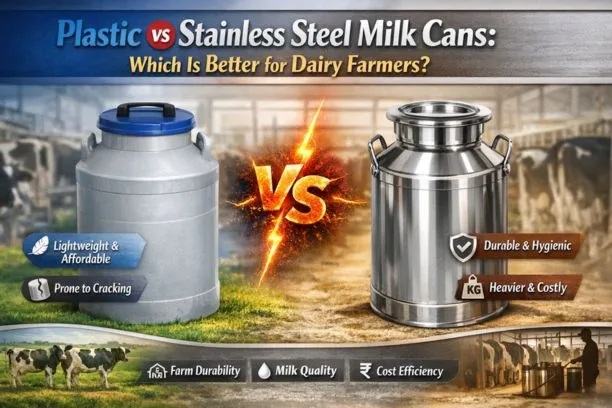
Plastic Milk Cans: Practical but Limited
Plastic milk cans are affordable and easy to machine. They provide reasonably well storage performance at a small scale for a few periods. But they have many problems. These can be used for a limited duration only and they do not hold well during harsh climatic conditions.
Key Concerns with Plastic Milk Cans
● Surface wear: Within a few months of usage, plastic milk cans develop signs of wear, like cracks and scratches. When being washed, they hold the moisture on their surface, on which bacteria can deposit.
● Hygiene challenges: The deposited bacteria on the surfaces create a problem of hygiene. This compromises the quality of milk contained inside.
● Deformation: Many milk cans are transported on an open carrier. Hot sun and open weather are directly exposed to these surfaces, leading to deformation.
Stainless Steel Milk Cans: Built for Longevity
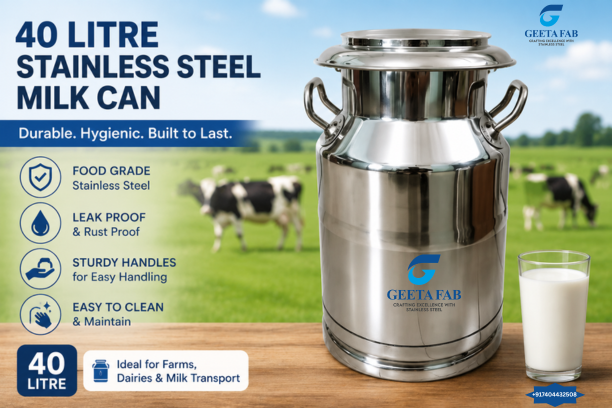
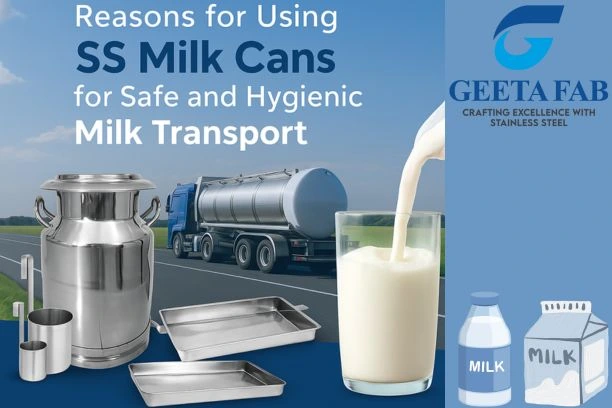
Stainless steel milking can is designed for long life, hygiene, and dependable strength. They are widely preferred in organized dairy systems, collection centres, and commercial operations. Their material properties align closely with the demands of modern dairy handling.
Why Stainless Steel Stands Out
These are lightweight with an excellent strength-to-weight ratio. They can be manufactured with a single sheet for minimal joints to avoid any weak points in the assembly of containers. Modern milk can manufacturers use food-grade stainless steel for the hygiene factor. It is non-reactive with the chemicals and does not leach into the milk. Rough handling, stacking, and transportation are tolerable with SS milk cans.
Which One Should You Choose?
Plastic cans have a limited scope of usage and they do not add long-term value to the dairy businesses.
For anyone looking for these features, stainless steel is the better option:
● Maintaining milk quality
● Reducing contamination risks
● Strong lid and locking
● Supporting large-scale operations
Conclusion
Dairy farming is largely dependent on the efficiency of its milk cans. If they are not stable, sturdy, and have a comfortable grip, they cannot offer reliable support for the operations and transportation. Containers that maintain hygiene and withstand daily use without compromise contribute directly to better outcomes. In this way, stainless steel milking can is the best option for dairy farming.
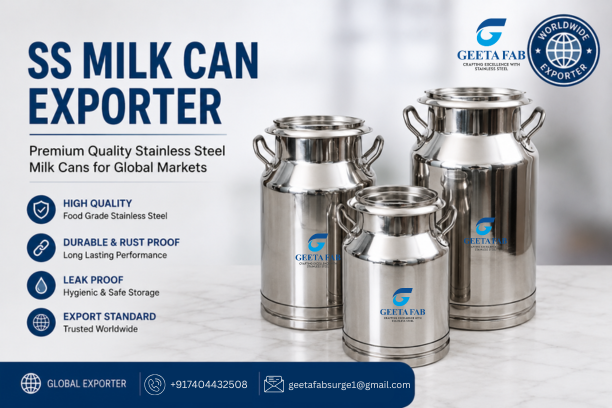
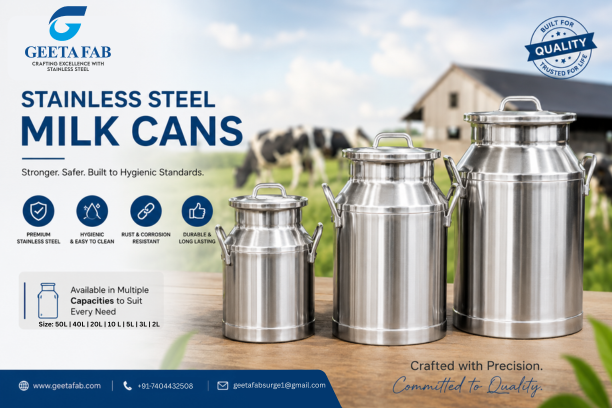
Geeta Fab is one of the best milk can manufacturers, providing them in various sizes. You can reach out to our team to buy from us.